Blog
Insights, updates, and resources for public transit agencies.
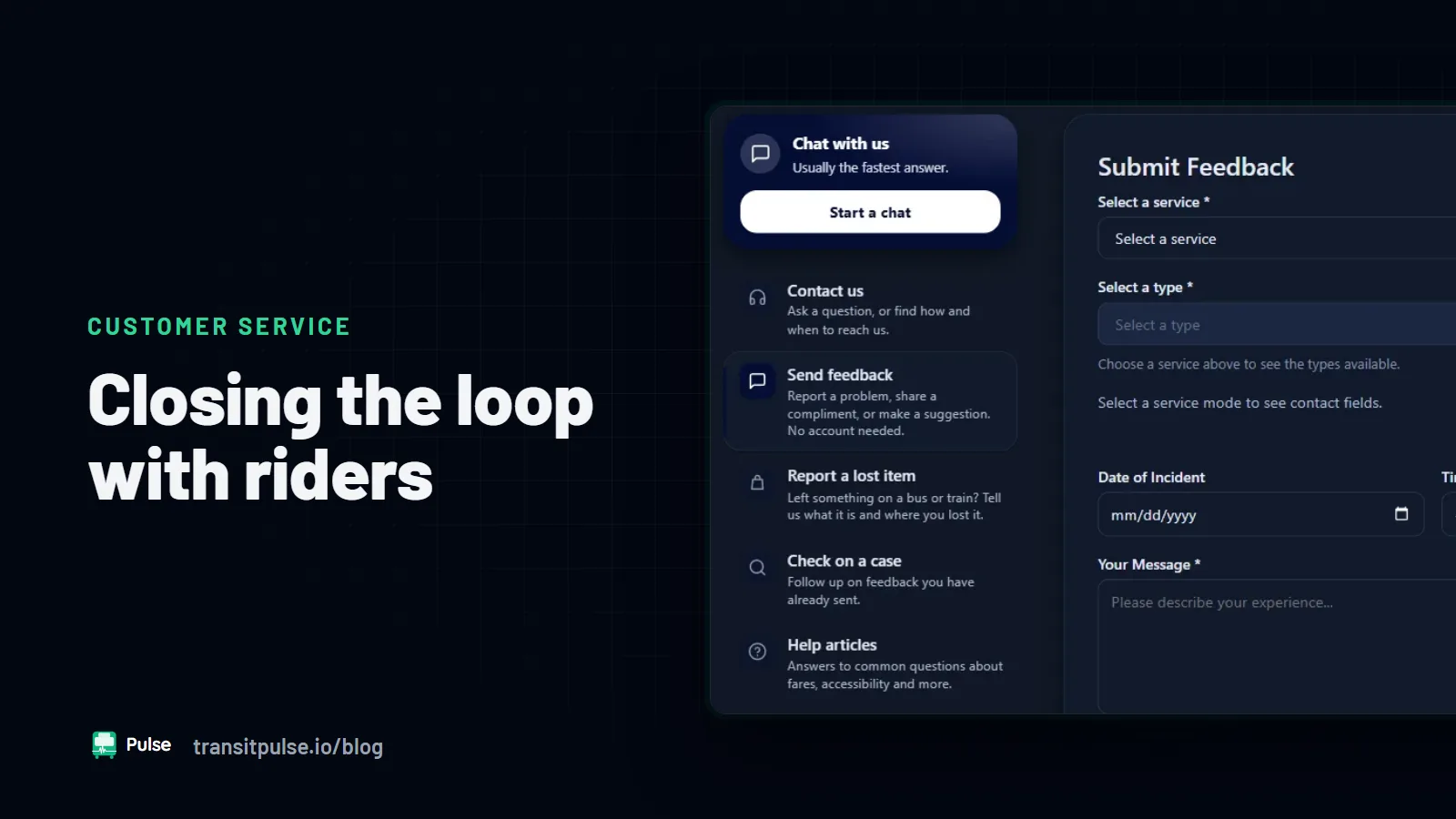
Closing the Loop: Why Riders Stop Sending Feedback
Riders stop sending feedback when they never hear back. Why a quiet inbox can be a warning, and four habits that close the loop with riders and operators.
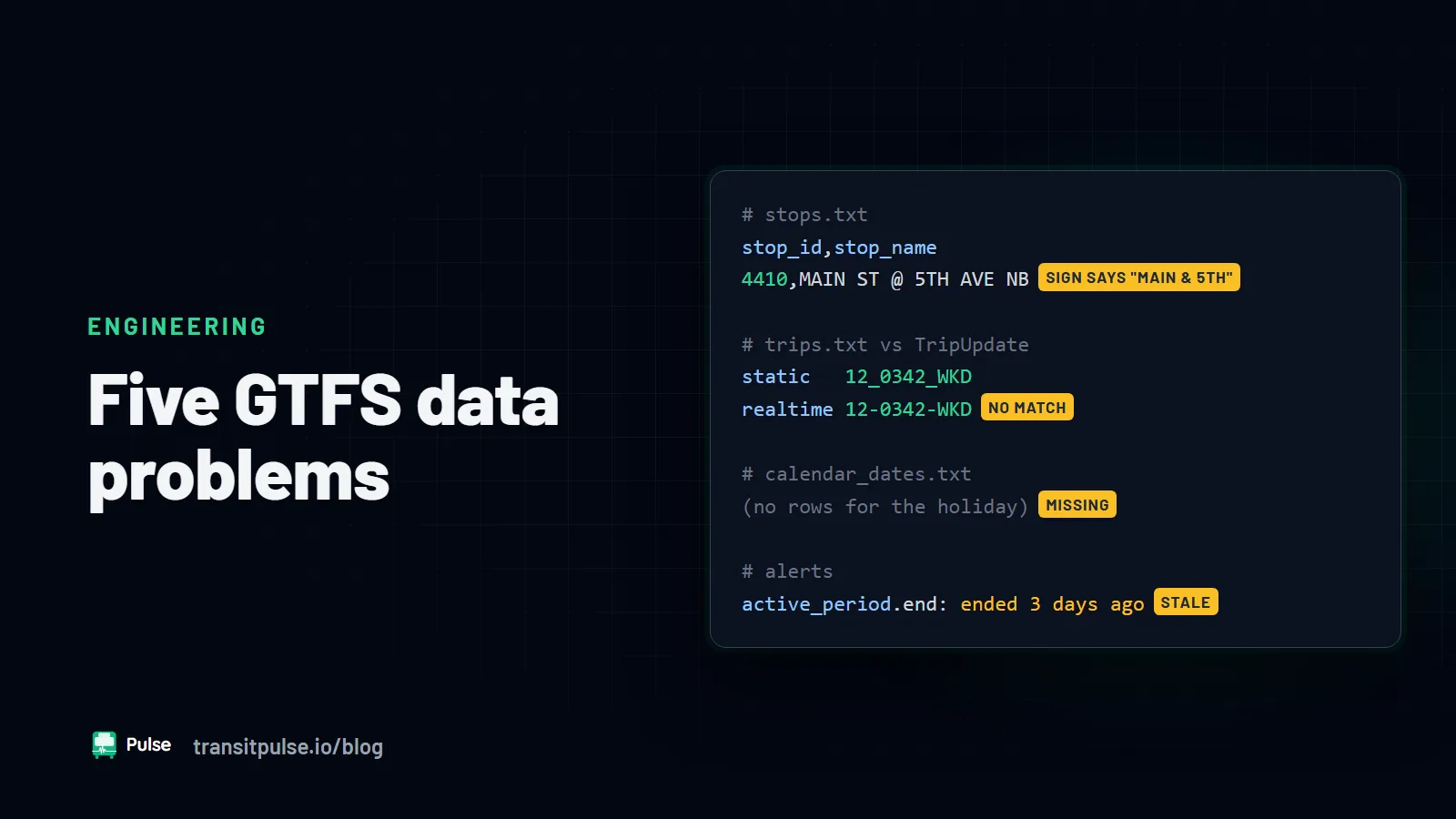
Five GTFS Data Problems That Confuse Riders and AI Agents
Five common GTFS data problems that give riders wrong answers in apps, on signs, and on the phone, with what riders see and how to check your own feed.
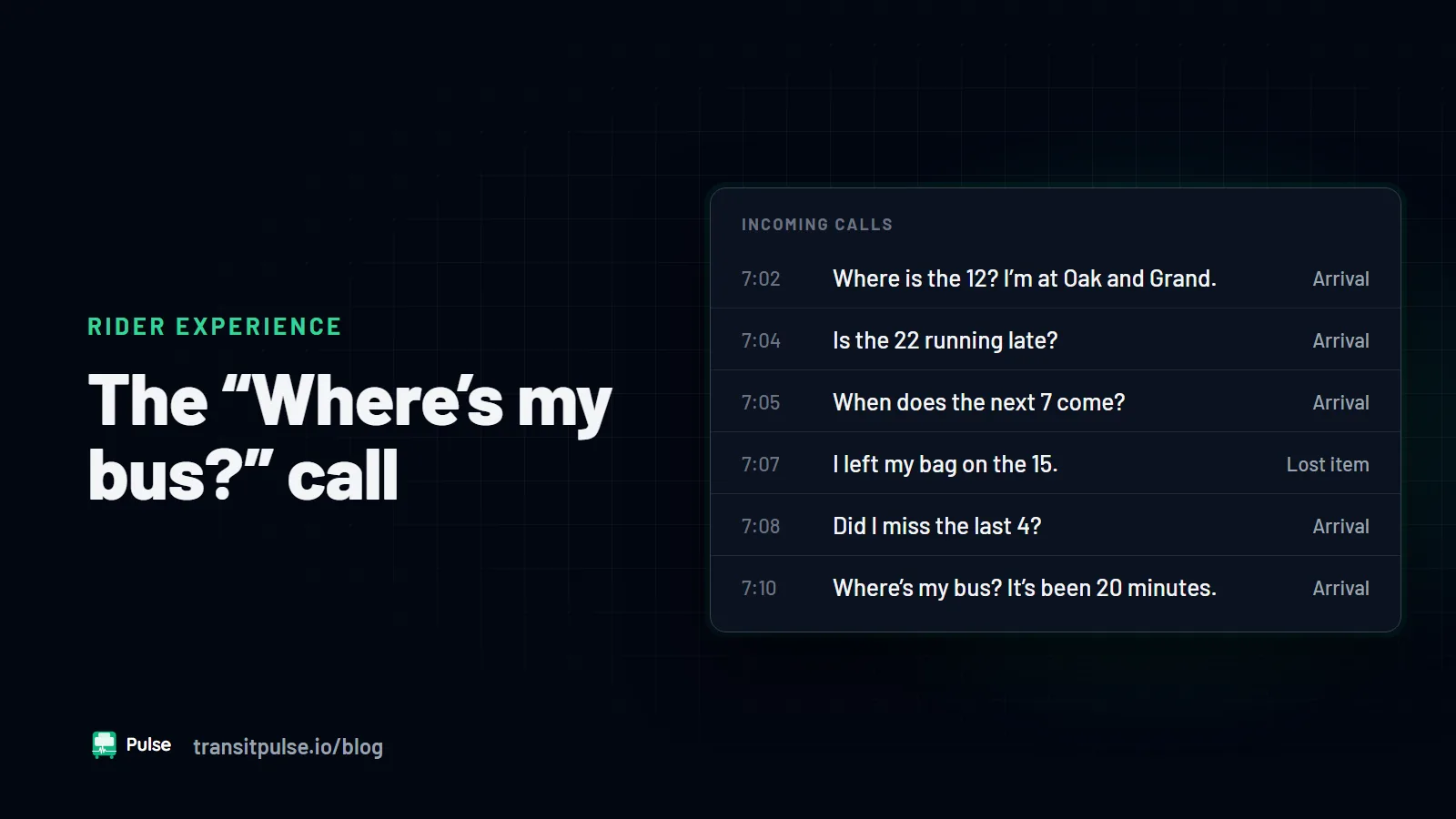
What Your Calltakers Want You to Know About "Where's My Bus?" Calls
Arrival-time calls fill a calltaker's shift. Why riders call instead of using the app, and how an AI agent that hands off to a person frees your staff.
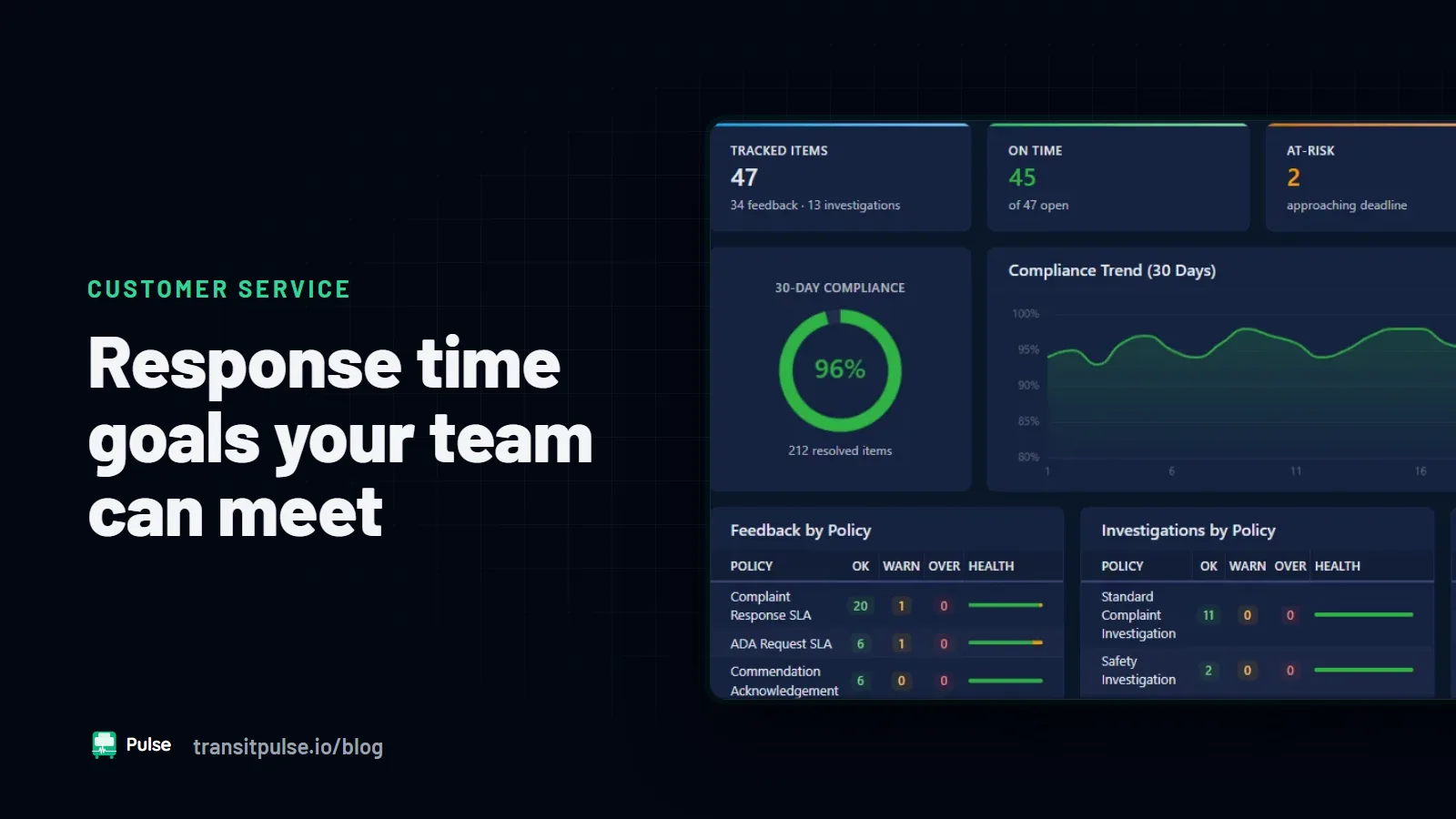
Response Time Goals for Rider Feedback That Your Team Can Meet
How to set response-time goals for rider feedback: separate acknowledge from resolve, set targets by category, match real staffing, and track aging cases.
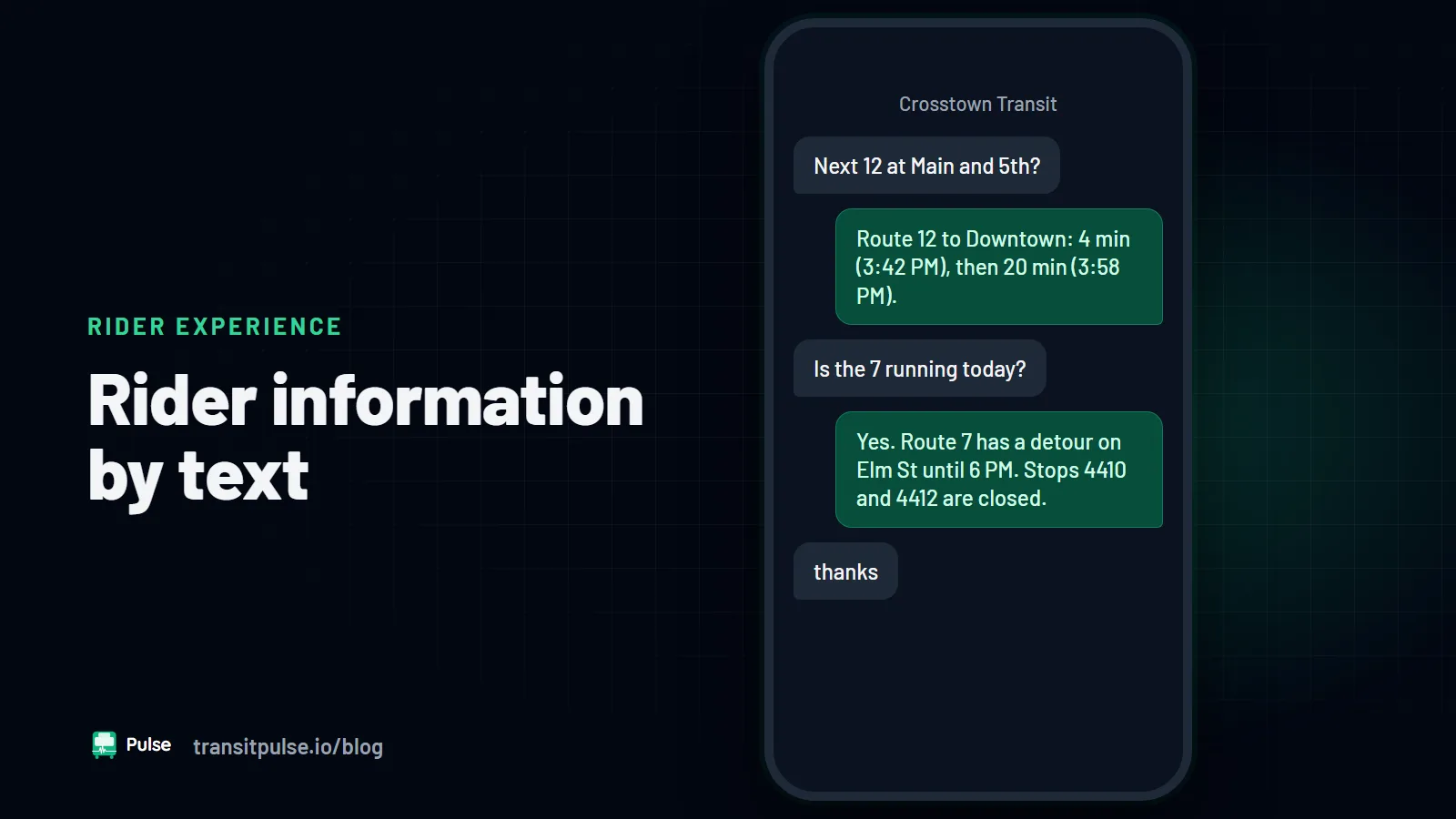
Rider Information by Text Message: What Transit SMS Needs to Get Right
What a transit text message service must get right: short answers, stop numbers, vague questions, STOP and HELP, carrier registration, and handoffs.
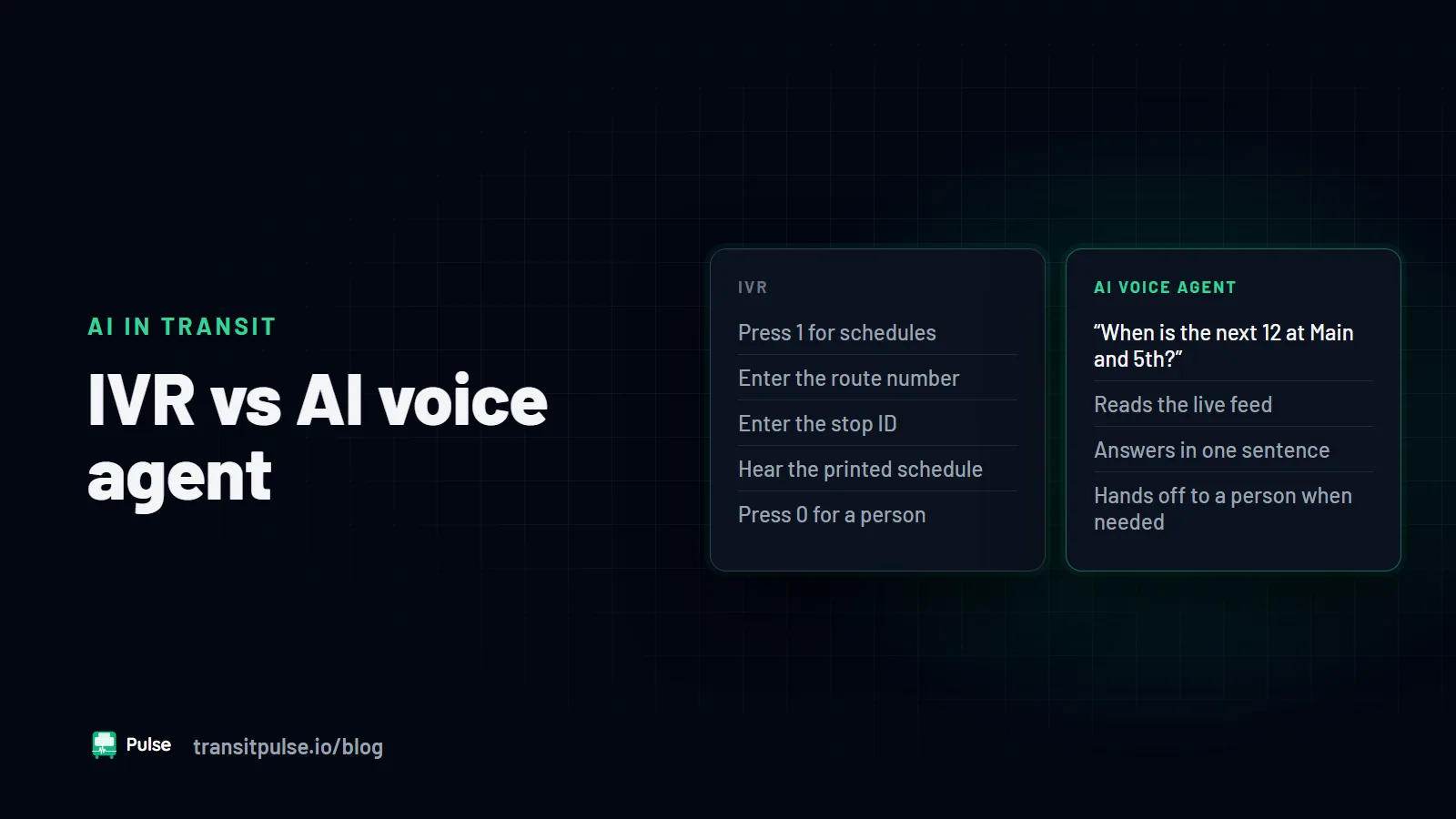
IVR vs AI Voice Agent: What Transit Agencies Need to Know
A fair comparison of traditional IVR systems and AI voice agents for public transit: what each does, where a plain IVR is still fine, and what to ask vendors.
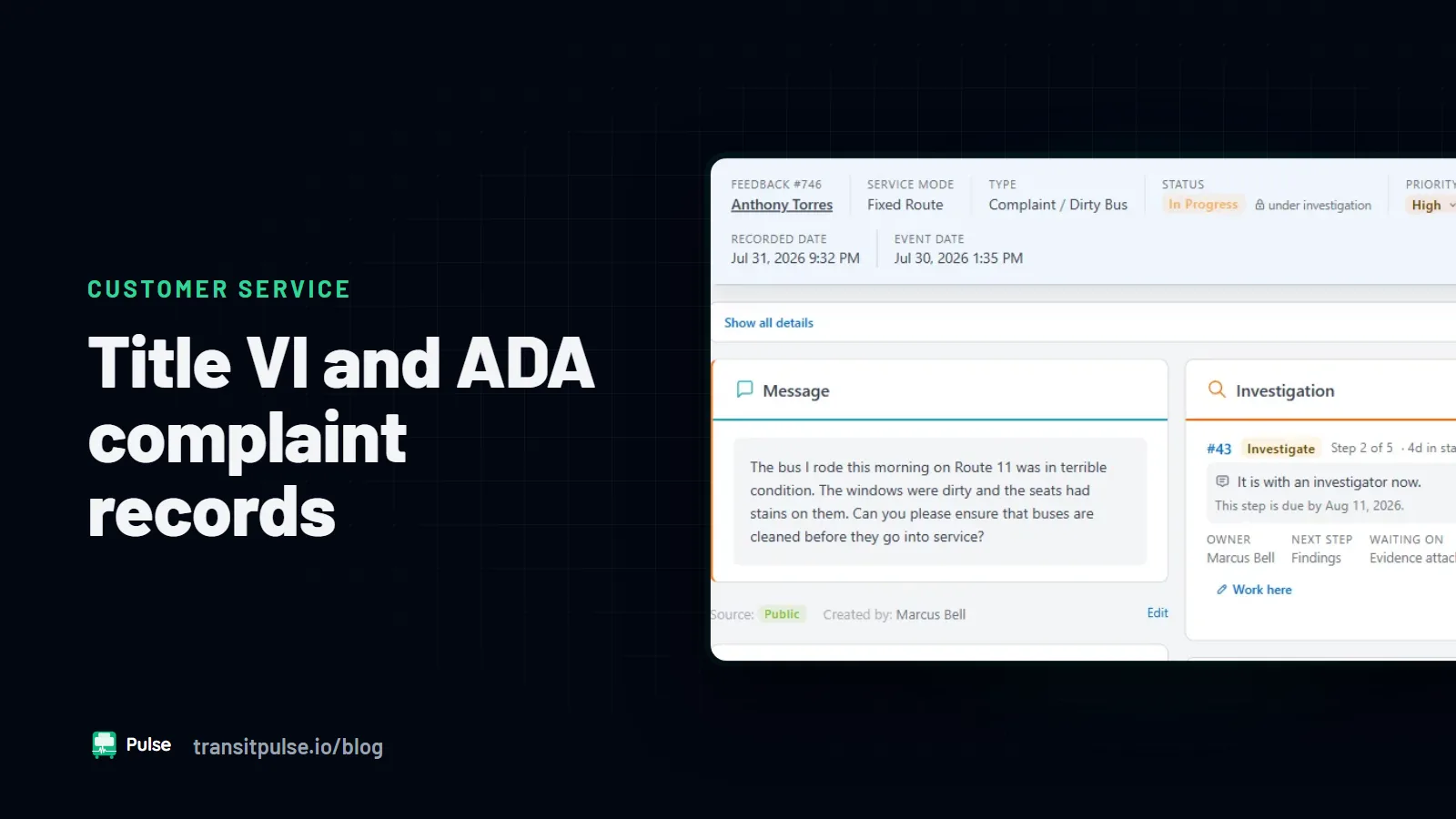
Title VI and ADA Complaints: Keeping Records You Can Stand Behind
Practical record keeping for transit Title VI and ADA complaints: flag at intake, keep them separate, track each step, and keep a log you can produce.
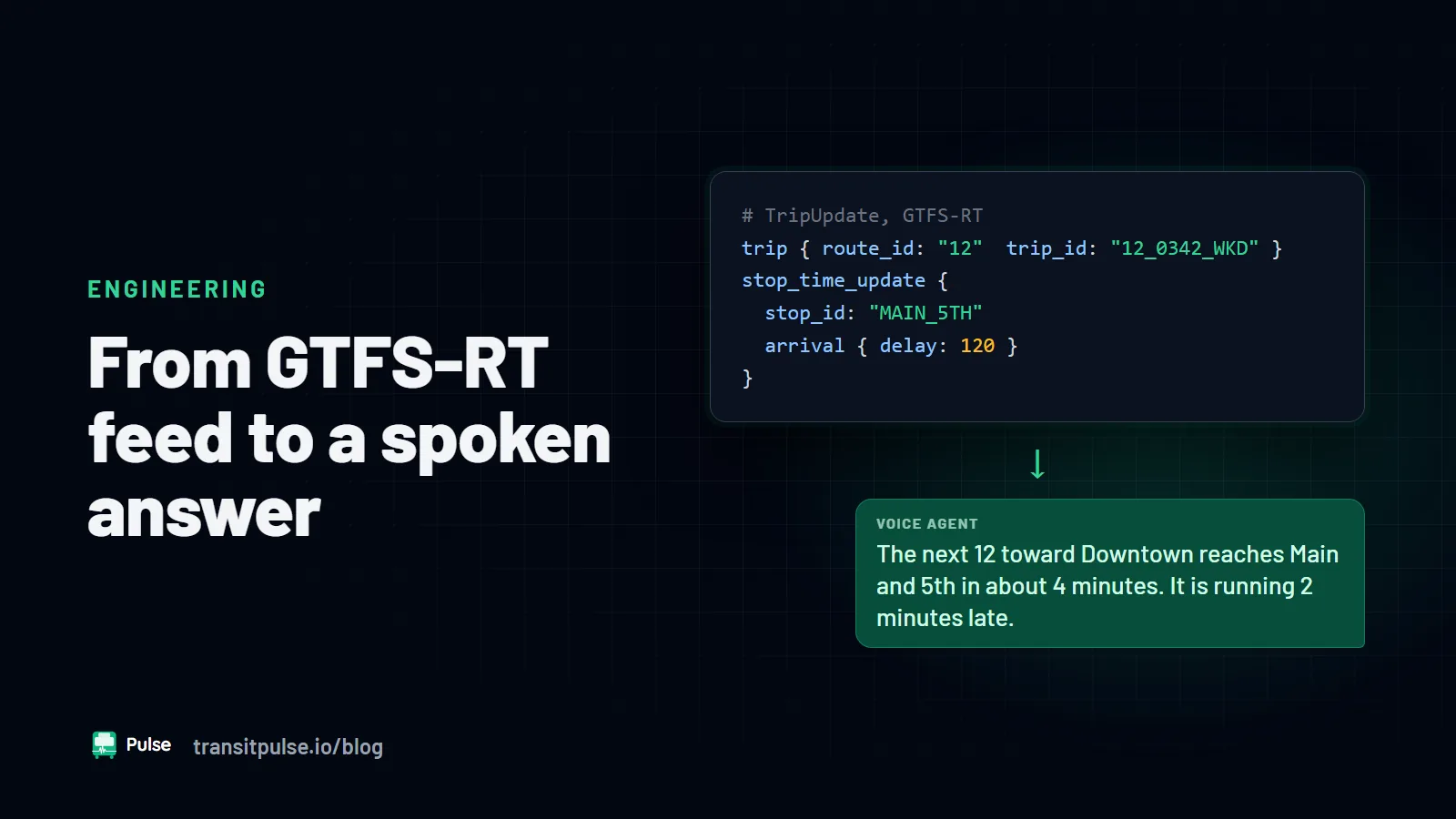
How GTFS-RT Turns Real-Time Transit Data Into Voice Answers
How an AI voice agent reads static GTFS and the three GTFS-RT feeds to answer a rider's call, and the feed problems that lead to wrong answers.
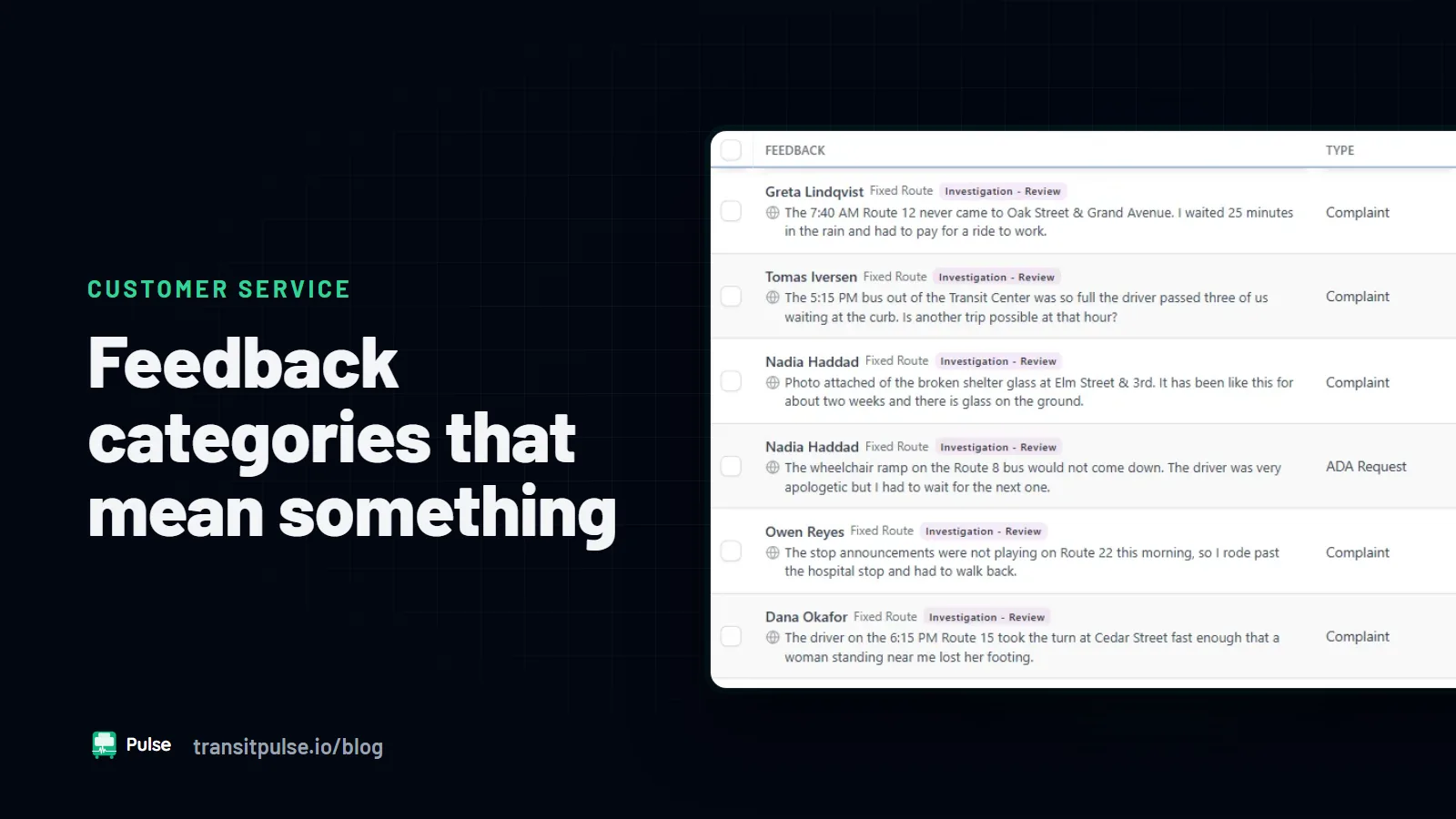
Complaint, Commendation, Inquiry: Feedback Categories That Mean Something
Poor feedback categories make board reports useless. Here is how transit agencies can split complaints, commendations, and inquiries, and keep it clean.