Sit beside a calltaker for one hour and count the calls about arrival times. Then watch what each of those calls involves. Each call is short, and each one follows nearly the same steps. The count is easy to see. The cost to the rest of the shift is harder to see, and calltakers feel it every day.
What one arrival-time call involves
On paper, "where's my bus" is a simple question. In practice, the calltaker goes through the same routine on every call:
- Greet the caller and find out which route they want.
- Work out the stop. Riders give cross streets, a store name, or "the stop by the clinic," not a stop ID.
- Confirm the direction, because the same corner often has stops on both sides.
- Open the real-time tool and find the prediction.
- Read the answer, then answer the follow-up questions. "Is that one on time?" "When is the one after that?"
- Enter a wrap code or a note, and take the next call.
When the bus is late or missing, the call changes. The rider is often upset. The calltaker must answer for a bus they do not control. The prediction may change again before the call ends.
What these calls cost a shift
The time on each call is only part of the cost. The larger cost is what the calls push aside.
- Other callers wait. While a calltaker reads an arrival time, a rider with an ADA complaint waits on hold. So does a rider with a missed paratransit pickup.
- Complex work gets broken up. A calltaker writing up a detailed complaint gets pulled away by the next arrival call. The complaint record suffers.
- The peaks come at the worst time. Arrival calls spike during storms, detours, and major delays. Those are the same hours when complaints and urgent calls spike too.
- The repetition wears people down. Reading predictions all day is tiring. Taking the blame for late buses is harder.
- Answers vary. Different calltakers read and explain predictions in different ways. Riders notice when two calls give two different answers.
Why riders call instead of using the app
It is easy to assume that riders call because they do not know about the app. Calltakers hear other reasons, and those reasons do not go away with a marketing campaign.
No smartphone
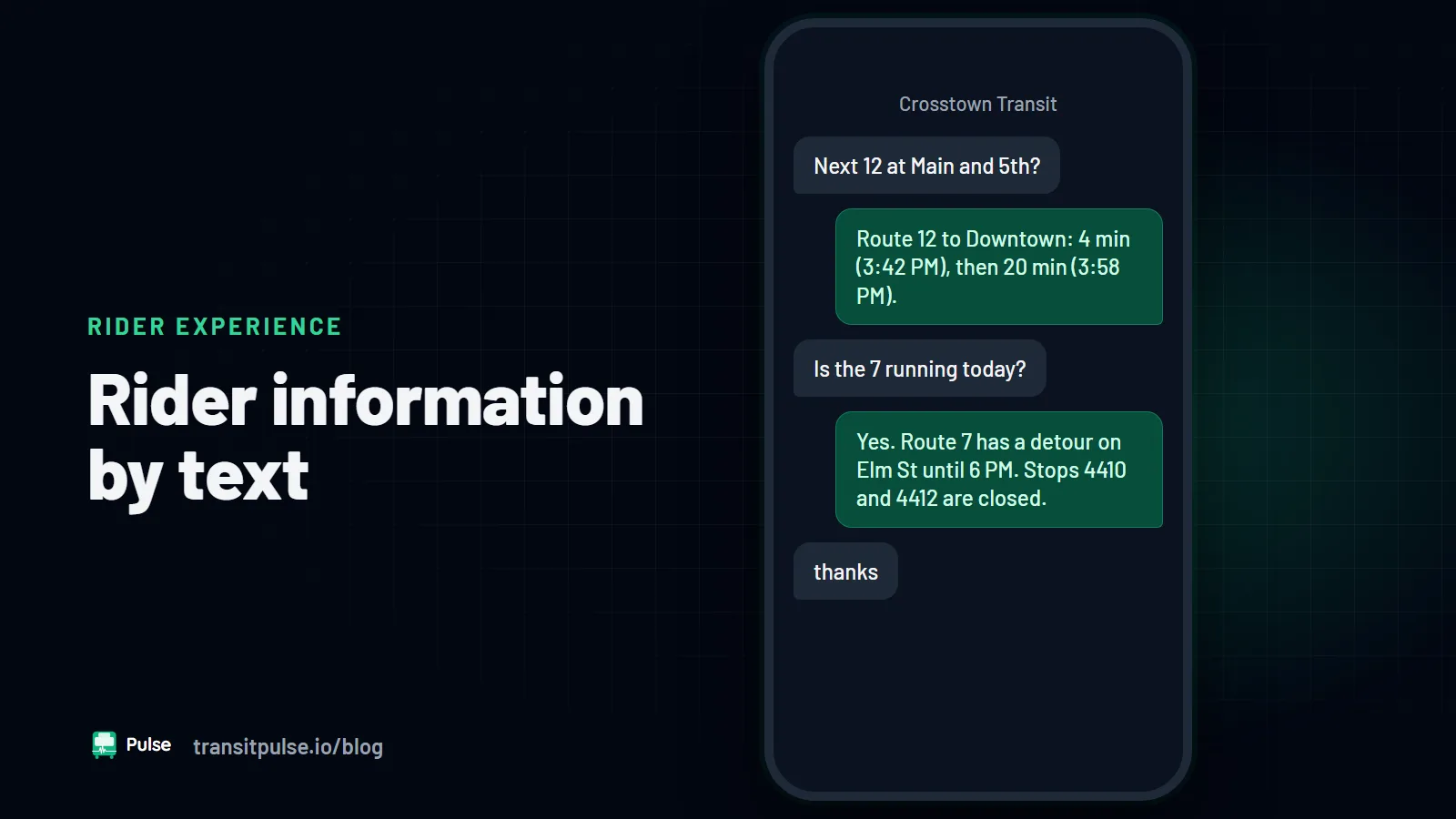
Some riders have a basic phone or only a landline at home. For them, a phone call is the only real-time option. A text message also works on a basic phone, which is one reason text service matters. The post Rider Information by Text Message: What Transit SMS Needs to Get Right covers that channel.
Low vision or other disabilities
Maps, small type, and moving icons are hard to use with low vision. Not every transit app works well with a screen reader. For many riders with a disability, asking a question out loud is simply faster and more reliable.
A limited data plan
Riders on prepaid plans may run out of data before the end of the month. Some stops have a weak signal. A voice call still goes through when an app cannot load.
They want a person to confirm
A rider who has watched a prediction say "2 minutes" three times in a row stops trusting the screen. Late at night or in bad weather, that rider wants to hear the answer from a person. The call is partly about information and partly about reassurance.
These riders are not a problem to move to the app. The phone is the right channel for them. The goal is to answer their calls well without using up the whole call center to do it.
What an AI agent should do on these calls
An AI voice agent can take arrival-time calls. It must work alongside your calltakers, not in place of them. Look for these behaviors.
- Answer from live data. The agent should read your GTFS-RT feed for predictions and alerts. A schedule read aloud is not what the rider called for.
- Accept the way riders describe stops. Riders use cross streets and landmarks. The agent should handle that, or ask a short question to narrow it down.
- Offer more than one channel. Some riders would rather text the question, or type it into web chat. The answers should come from the same data.
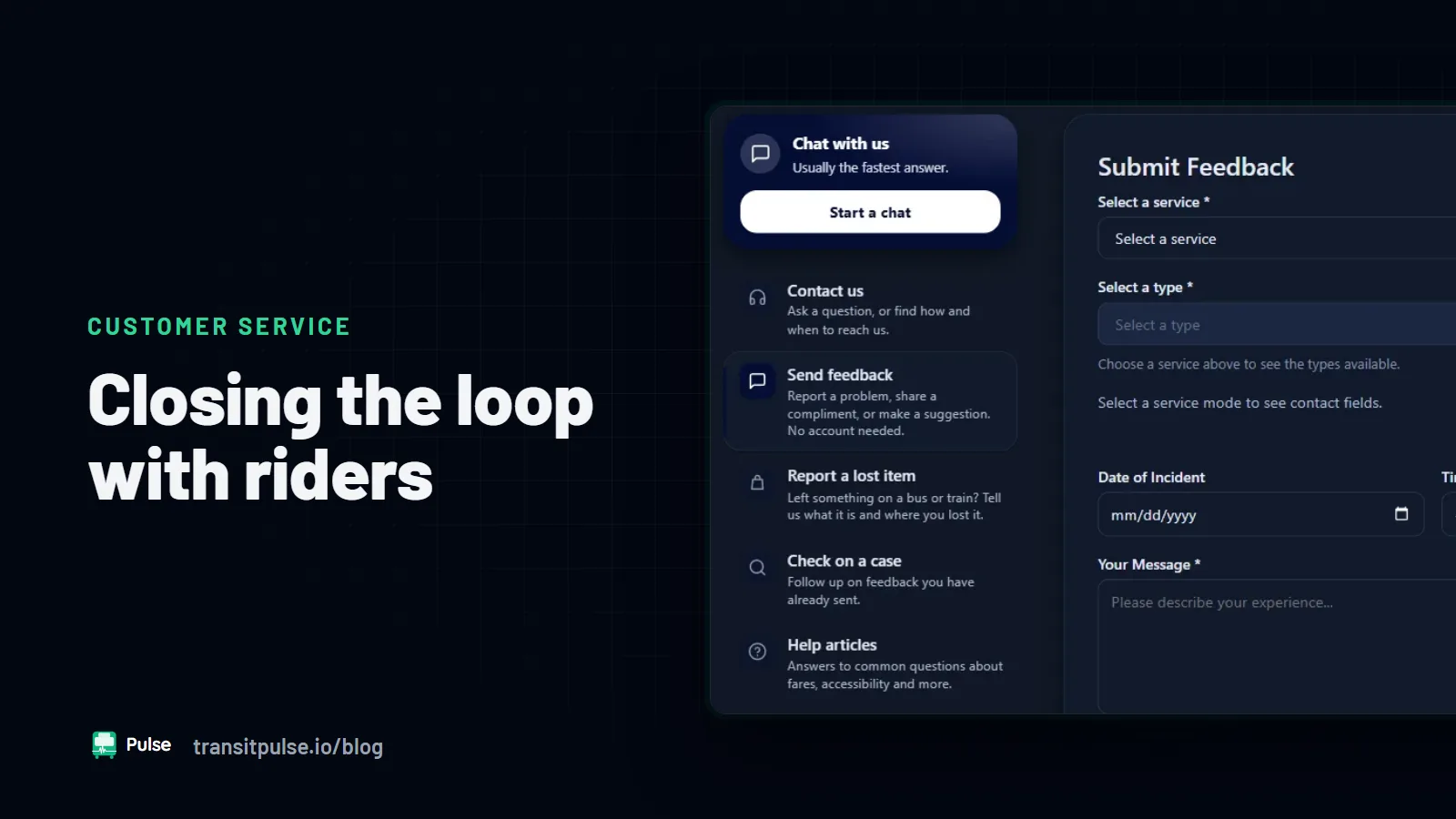
- Hand off quickly. Some riders ask for a person, sound upset, or raise a complaint. They should reach a calltaker with no extra steps. Paratransit questions should go straight to your staff.
- Keep a record. Each call should have a recording and a transcript. When a rider says the system gave a wrong time, a supervisor can check what it said and why.
What calltakers get back
When the arrival calls go elsewhere, the calls that remain are the ones that need judgment. These include complaints, ADA requests, paratransit problems, safety concerns, and riders in distress. Calltakers can give those calls full attention instead of fitting them between predictions.
Supervisors get something too. Reports on what riders ask about show which stops, routes, or alerts confuse people. That points to fixes in signs, schedules, or the feed itself. Our post on the signs that an IVR is holding an agency back lists more of these patterns.
Bring calltakers into the change
Calltakers know these calls better than anyone. Ask them which calls an automated agent should take and which it should never take. Let them review early transcripts and flag answers that would confuse a rider. Tell them plainly that the goal is to move repetitive work, not to cut their jobs. A rollout that calltakers helped shape gets fewer surprises after launch.
Pulse RideInfo works alongside your existing call center. It answers arrival questions by phone, text, and web chat 24/7 from your GTFS and GTFS-RT feeds. Paratransit and other calls that need a person still go to your staff.